Redefining Winning in Education: Lessons from Coach Frank Dick and Educational Thought Leaders

I recently watched a clip from Coach Frank Dick, which offered a profound insight into the true essence of winning and redefined success in a way that deeply resonates with education (Abrahams, 2025). His message serves as a timely reminder for educators to reflect on how we define achievement, success and progress in our classrooms. Watch here

For years, education has shifted toward valuing the learning journey over the outcome. We’ve championed failing forward, the growth that comes from mistakes and the power of ‘yet’. However, Coach Dick’s perspective provides an even broader framework, one that challenges how we frame success and guides us toward a more holistic approach.

At its core, his coaching approach aligns with Self-Regulated Learning (SRL) – the idea that students take ownership of their learning, set goals, monitor progress and develop strategies to overcome obstacles. Education should be a journey of continuous growth, not just for students but also for Educators. True success isn’t measured by external benchmarks alone but by personal improvement – being better today than yesterday (Abrahams, 2025).

Personal Growth

Traditionally, success in education has been measured by grades, rankings and standardised test scores, reinforcing a competition driven mindset. However, educational thinkers such as Spencer & Juliani and Sir Ken Robinson advocate for a shift towards creativity, autonomy and lifelong learning habits, emphasising that deep engagement fosters intrinsic motivation and meaningful growth (Robinson, 2011; Spencer & Juliani, 2017). Likewise, Amanda Ripley’s The Smartest Kids in the World critiques test driven education, highlighting that high achieving school systems prioritise problem solving and deep learning over high scores (Ripley, 2013).

This perspective aligns with Coach Dick’s philosophy, which defines winning as continuous self-improvement rather than external validation. Similarly, Self-Regulated Learning (SRL) principles emphasise that students should set their own goals, track progress and reflect on their learning journey, fostering independence and resilience (Barr, 2024). By redefining success in education, we encourage students to embrace progress over perfection, equipping them with the skills needed for lifelong learning.

A powerful analogy for this shift can be found in athletic training, where the focus is not on winning medals but on beating personal records. This mindset transforms how we view success in education – moving away from the traditional “A grade” mindset to one that celebrates individual progress and deeper understanding. When students focus on personal growth rather than competing with classmates, they develop a healthier relationship with learning, asking themselves, “What did I understand better today?” instead of anxiously comparing test scores.

This personal growth approach benefits both academic achievement and student wellbeing. By removing the pressure of competition, students experience less anxiety about grades and develop a stronger sense of ownership over their learning journey. As they witness their own progress, they gain confidence and become more engaged in their subjects, leading to intrinsic motivation and a love of learning. This shift fosters resilient learners who understand that education is about continuous improvement rather than perfect scores.

Teachers play a crucial role in this transformation by creating tools that track individual progress and providing feedback centred on improvement, rather than simply marking errors. They help students identify their unique learning patterns, set meaningful personal goals and celebrate achievements – big or small. By maintaining learning journals, tracking progress and prioritising deep understanding over rote memorisation, students become confident, motivated learners who recognise that true success isn’t about being the best in class – it’s about being better than they were yesterday.

This approach transforms education into a journey of continuous improvement rather than a race to outperform others by fostering self-awareness, resilience and personal growth. When we redefine winning as progress rather than perfection, we empower students to embrace challenges, develop perseverance and cultivate the skills necessary for lifelong success.

Student Ownership and Self-Regulation

In modern education, student ownership represents a fundamental shift from passive learning to active engagement, where students take control of their learning journey. This approach empowers them to move beyond simply following teacher instructions to actively participating in decisions about their education. When students take ownership of their learning, they develop a deeper understanding of not just what they are learning, but also why and how they learn best.

At its core, SRL is the foundation of student ownership. Barr (2024) highlights how self-awareness and reflection are crucial in helping students adapt and take control of their learning process, while Knight (2016) emphasises the role of dialogue and feedback in fostering accountability and ownership. Similarly, Coach Dick stresses that both athletes and learners must take responsibility for their progress and make intentional changes to refine their performance. By embedding these principles in education, we empower students to become problem solvers who persist through challenges and take an active role in shaping their learning.

A key aspect of student ownership is goal setting and strategic learning. Rather than simply being told to improve, students identify their own areas for growth and develop personalized strategies to strengthen their skills. This shifts motivation from external pressures—pleasing teachers or parents—to intrinsic motivation, where students understand the value and purpose of their education (Spencer & Juliani, 2017).

This approach naturally fosters resilience and adaptability, as students must learn to monitor their progress, reflect on their challenges and adjust their learning strategies accordingly. The Anxious Generation (Haidt, 2024) warns against overprotecting students from struggle, highlighting that discomfort and challenge are essential for intellectual and emotional growth. This aligns with Coach Dick’s approach, which argues that winning is not about avoiding failure but about using setbacks as learning opportunities. By creating a classroom culture that normalises struggle and failure as part of growth, educators help students develop the confidence to take risks, rethink strategies and persist through difficulties.

Teachers play a crucial role in facilitating student ownership by providing structured opportunities for choice, reflection and decision making, while also offering guidance and feedback when needed. This might include self-assessment activities, learning journals, student-led goal setting and project based learning, where students choose topics that interest them and take responsibility for their outcomes. However, student ownership does not mean leaving students entirely on their own – teachers act as coaches and facilitators, equipping students with the skills needed to make informed decisions while ensuring they remain aligned with learning objectives.

By fostering student ownership and self-regulated learning, we prepare students for a world where lifelong learning is essential for success. They develop decision making abilities, time management skills and the capacity for self-evaluation, understanding the direct connection between their effort and achievement. Most importantly, they build the confidence and competence to direct their own learning, ensuring that education is not just about following a curriculum but about developing the skills to grow and adapt in an ever changing world.

A Positive Approach to Failure: Communication, Collaboration, and Growth

Failure is not just inevitable in learning – it is invaluable. A positive approach to failure shifts how we view mistakes and setbacks, transforming them from sources of shame into powerful learning opportunities. This perspective is essential for developing resilient, confident learners who are unafraid to take intellectual risks and tackle challenges. Coach Dick reinforces this idea, calling attention to true success being rooted in continuous self-reflection and growth rather than external validation. When students and educators engage in thoughtful conversations about failure, they build trust, problem solving skills and a culture that fosters persistence and improvement.

Creating a safe environment for risk taking begins with shaping classroom culture. Better Conversations (Knight, 2016) accentuates the importance of active listening, open dialogue and reflection in fostering a growth oriented learning environment. When educators normalise failure, openly discussing mistakes and modelling how to learn from them, they reframe setbacks as learning moments. This allows students to ask questions freely, share their thinking processes without fear of judgment and view challenges as opportunities rather than threats to self-worth.

The practical application of this mindset involves strategies that make failure constructive rather than discouraging. Teachers can introduce “error analysis” sessions, where students examine mistakes collaboratively to understand underlying thought processes and adjust their strategies. Another effective method is celebrating “magnificent mistakes” – errors that lead to unexpected insights or deeper understanding. These practices cultivate a growth mindset, reinforcing that abilities are not fixed but can be developed through effort, strategic thinking and learning from mistakes (Dweck, 2006).

The impact of embracing failure positively extends far beyond academics. Students develop crucial life skills such as resilience, problem solving and adaptability. They learn that setbacks are temporary and surmountable rather than permanent reflections of their abilities. This mindset encourages students to take on challenges with confidence, knowing that even if they don’t succeed immediately, they can adjust, improve and ultimately succeed through persistence and reflection.

Furthermore, a positive failure culture fosters innovation and creativity. When students are not paralysed by the fear of making mistakes, they are more likely to think outside the box, take intellectual risks and engage in creative problem solving. Instead of viewing failures as endpoints, they begin to see them as data points – valuable information that guides their learning, helps them refine their approach and builds their capacity for adaptability. This approach produces resilient, innovative learners who can persist through difficulties and adjust to new challenges.

The true enduring value of this mindset lies in its preparation for real world success. In an ever changing world, where adaptability, innovation and persistence are essential, the ability to learn from failure, adjust course and persevere through challenges is a vital skill. Students who develop this mindset in school are far better equipped to handle obstacles in higher education, careers and personal life. They internalise the truth that failure is not the opposite of success – but an essential part of it.

By actively cultivating classroom spaces that embrace open communication, collaboration and reflection, educators empower students to take risks, embrace challenges and build confidence in their ability to learn and grow. A culture that values growth over perfection ensures that students don’t just memorise facts or aim for high grades but become lifelong learners prepared for success beyond the classroom.

Implementation Strategies for Transformative Learning

Successfully implementing transformative educational approaches requires a structured yet flexible strategy that engages both teachers and students in meaningful change. At the core of this shift is student directed goal setting, where students take ownership of their learning by setting personal, achievable objectives. Teachers guide this process by helping students break down goals into manageable steps, set realistic timelines and identify success criteria, ensuring that learning remains both purposeful and aligned with curriculum goals.

Progress monitoring plays a crucial role in maintaining student motivation. Tools such as learning journals, digital portfolios and goal tracking systems help students visualise their growth. Regular check-ins with teachers provide opportunities for reflection, strategy adjustments and celebration of achievements, reinforcing the importance of learning as an ongoing process rather than just a series of outcomes.

Building a strong communication network further supports this approach. Peer learning groups, mentoring relationships and structured reflection sessions create a dynamic, collaborative environment where students practice communication skills, receive feedback and refine their learning strategies. Teachers model effective communication and provide structured opportunities for discussion through group projects, presentations, and student-led learning conversations.

Assessment must also evolve to reflect growth focused learning. Instead of relying solely on traditional grading, rubrics that value effort and progress, portfolio assessments showcasing long term development, and self-assessment tools, students can actively evaluate their learning journey. This shift emphasises process over product, fostering resilience and deeper engagement.

Professional development is essential for successful implementation. Teachers need ongoing support, collaborative learning opportunities and access to resources that enable them to facilitate student directed learning while maintaining high academic standards. Regular reflection on teaching strategies ensures continued effectiveness and responsiveness to student needs.

Creating a supportive school culture is key to sustaining change. Engaging parents and the wider school community through communication, student showcases and community involvement helps build broader support for student-led learning approaches. When schools prioritise consistency while remaining adaptable, they create an environment where students develop into confident, self-directed learners prepared for future challenges.

Conclusion: Redefining Winning for Lifelong Success

Winning isn’t about external validation or outperforming others – it’s about growth, learning and resilience. By redefining success as continuous self-improvement, educators can create environments where students take ownership of their learning, embrace challenges and develop persistence for lifelong success.

To apply these principles, we must:
Encourage autonomy by allowing students to set meaningful goals.
Foster resilience through safe spaces for risk taking and learning from failure.
Rethink assessment to emphasise progress and mastery over competition.

Just as athletes focus on personal excellence rather than just winning medals, education should be a journey of learning, adapting and evolving. By shifting our approach, we equip students with the self-awareness, critical thinking and adaptability needed to succeed in an ever changing world.

Summary of the Alignment with Frank Dick’s Approach to Coaching:

Educational ConceptKey Educational ThinkersConnection to Frank Dick’s Philosophy
Personal Growth Over CompetitionSpencer & Juliani (2017), Robinson (2011), Ripley (2013)Success is about self-improvement, not outperforming others. True winning means being better today than yesterday.
Learning as a Journey, Not a DestinationRobinson (2011), Spencer & Juliani (2017), Ripley (2013)Growth happens through continuous learning, adaptation, and reflection, rather than just achieving top scores.
Growth happens through continuous learning, adaptation, and reflection rather than just achieving top scores.Barr (2024), Knight (2016)Just as athletes take responsibility for progress, learners must set goals, track progress, and refine strategies to succeed.
Embracing Challenge and FailureSpencer & Juliani (2017), Barr (2024), Haidt (2024)Winning is not about avoiding failure but learning from setbacks and refining strategies to improve.
Communication, Collaboration, and Growth MindsetKnight (2016), Dweck (2006)Success is driven by self-reflection and meaningful conversations, not just external rewards.
Resilience and AdaptabilityHaidt (2024), Dweck (2006)Just as athletes persist through obstacles, students must develop grit and problem solving skills to navigate challenges.
Rethinking Assessment: Mastery Over GradesBarr (2024), Spencer & Juliani (2017)Focus on progress and mastery rather than rigid performance metrics, reinforcing that improvement matters more than rankings.
Real World Preparedness and Lifelong LearningRobinson (2011), Ripley (2013), Haidt (2024)Education should prepare students for adaptability, continuous learning, and real world problem solving, just as athletes train for evolving competition.

References

Abrahams, D. (2025, January 25). What is Winning? [Video]. LinkedIn. Retrieved from https://www.linkedin.com/feed/update/urn:li:activity:7288396136950706180/

Barr, S. (2024). Educate to Self-Regulate: Empowering Learners for life long success. Melbourne: Amba Press.

Claxton, G., Chambers, M., Powell, G., & Lucas, B. (2013). The Learning Powered School: Pioneering 21st Centruy Education. TLO Limited.

Dweck, D. C. (2006). Mindset: How you can fulfil your potential. Robinson.

Haidt, J. (2024). The Anxious Generation: How the great rewiring of childhood is causing an epidemic of mental illness. Penguin Press.

Knight, J. (2016). Better Conversations: Coaching Ourselves and Each Other to be More Credible, Caring, and Connected. Corwin.

Ripley, A. (2013). The Smartest Kids in the World and How They Got That Way. NewYork: Simon & Schuster.

Ritchhart, R. (2015). Creating Cultures of Thinking: 8 Forces we must master to truley transform our schools. Jossey-Bass.

Robinson, K. (2011). Out of Our Minds: Learning to be Creative. Capstone Publishing Ltd.

Spencer, J., & Juliani, A. (2017). Empower: What happens when students own their learning. IMpress.

The Importance of Being Tech-Curious in Education: Adapting to a Rapidly Evolving Technological Landscape

Throughout history, people have learned through the traditional roles of teacher and student. However, the emergence of technology has added a new dimension to this dynamic at an unprecedented pace. With the integration of technology, teachers, students, and the learning process are all adapting in an increasingly vibrant manner.

Subsequently, we must examine and understand the various technological approaches to learning and their application to the teaching and learning process. By doing so, we can better equip ourselves to meet the needs and expectations of modern learners, who are accustomed to utilising technology in their daily lives. As such, it is essential for educators to remain open-minded and adaptable to these new advancements to provide the most effective and engaging learning experiences for their students.

While the traditional roles of teacher and student remain fundamental, the integration of technology has ushered in a new era of learning that requires careful examination and adaptation. To meet the evolving needs of modern learners, educators must embrace changes and integrate new technologies into their teaching practices. The COVID-19 pandemic accelerated this process, forcing education to adapt quickly to remote and hybrid learning. As a result, teachers have to become more flexible and innovative in their approach to teaching. The pandemic highlighted the importance of adapting to new technologies in education. Teachers must continue to do so to stay current and provide the best learning experiences for their students.

One of the surprising benefits of remote learning was the rise of technological integration in education. The ability to connect with students from anywhere in the world allowed for greater flexibility and accessibility, regardless of physical location or schedule constraints. Teachers quickly learned to become proficient in technologies that supported remote learning, such as video conferencing platforms, virtual whiteboards, and online collaboration tools. This enabled us to provide students with engaging and effective learning experiences transcending traditional classroom boundaries.

While some may have found remote learning challenging, I personally found it to be a positive and galvanising experience. Despite the increased workload and irregular working hours, I noticed something special in my students that I may not have discovered in a traditional classroom setting. I saw shy, introverted students find their voice and gain confidence through the use of technology in remote learning. This inspired me to incorporate more technological approaches into the physical classroom to help even more students find their voice and thrive.

Integrating technology into education has brought about new and exciting opportunities for teachers and students. It is now our responsibility as educators to embrace these changes and adapt our teaching practices to meet the evolving needs of modern learners. By doing so, we can provide engaging and effective learning experiences that transcend traditional classroom boundaries and enable access to education from anywhere in the world.

In today’s rapidly advancing technological landscape, being technology curious as a teacher is more important than ever. Technology has changed the way we communicate, work, and learn. As educators, we are responsible for understanding and leveraging these technological advancements to provide our students with the best possible learning experiences.

Being technology curious means being willing to explore and experiment with new technologies in the classroom. This can range from using digital platforms to create interactive lessons to integrating augmented or virtual reality into lessons. Teachers curious about technology are eager to learn new tools and resources to enhance student learning and make their teaching more effective and engaging.

In addition to being willing to try new things, being inquisitive about technology also means having a growth mindset. This means being open to learning and willing to make mistakes to grow and improve. As technology continues to evolve, it is essential for teachers to remain curious and adaptable to change.

By being interested in the advancement of technology, teachers can also model lifelong learning for their students. By showing an interest in new technologies and staying up-to-date with the latest trends, teachers can inspire their students to do the same. This can help students develop critical thinking skills and a sense of curiosity that will serve them well throughout their academic and professional lives.

Being tech-curious means being interested in the advancements in artificial intelligence (AI) and technologies like ChatGPT. As AI continues to revolutionise various industries, including education, it is important for teachers to learn and understand this changing new paradigm. By doing so, teachers can incorporate new technologies into their teaching practices to enhance student learning and engagement. Additionally, understanding AI can provide insight into how it works and how it can be ethically applied to benefit society. By staying tech-curious, teachers can stay ahead of the curve and prepare their students for a future where technology plays an increasingly important role.

Despite living in a rapidly evolving technological landscape, why are some hesitant to adapt to the changing needs of modern learners? To meet the evolving needs of learners today, educators of all levels should prioritise becoming tech-curious to explore potential benefits for student engagement and learning. Educators must remain aware and adaptable, regardless of the level they teach. Recognising the shift in the educational paradigm towards a trilateral and interdependent relationship between teacher, student, and technology is crucial for all educators.

Image by Mohamed Hassan from Pixabay

Farewell 2020 – Moving Forward into 2021

As we farewell one decade and welcome another, it is timely to look forward to what might be. What possibilities and opportunities may present themselves. 2020 saw us enter into an outlandish realm of uncertainty. Covid 19 cast a shadow which has obscured the light. For many, it has been hard to see many positives in this darkness.

The events of 2020 hit us hard and many were challenged with our new “normals” of living through a pandemic: isolation, quarantine, working from home, mandatory wearing of masks and continuous disinfecting. We may have felt that all hope was lost and succumbed to ever growing (and somewhat irrational) fears which only made the darkness appear more intense. As these fears took hold, they obscured our ability to see clearly and we became unbalanced.

“We’ve all got both light and dark inside us. What matters is the part we choose to act on,” (Sirius Black, Harry Potter and the Prisoner of Azkaban). This quote draws attention to how we can either feed the lightness or darkness through our actions. Light and dark are constantly duelling with one another and we must be mindful to keep a balance between them. During the exceptional and disconcerting moments we find ourselves facing, we need to remember that “…happiness can be found even in the darkest of times, if one only remembers to turn on the light” (Dumbledore, Harry Potter and the Prisoner of Azkaban).

I read somewhere that the size of any obstacles is dependent on your state of mind. From this point forward, I choose to nurture and strengthen the light and reduce the shadow poised over us during these unprecedented times. I choose to see beyond and realise the potential of a new year. I will take definitive action and move forward.

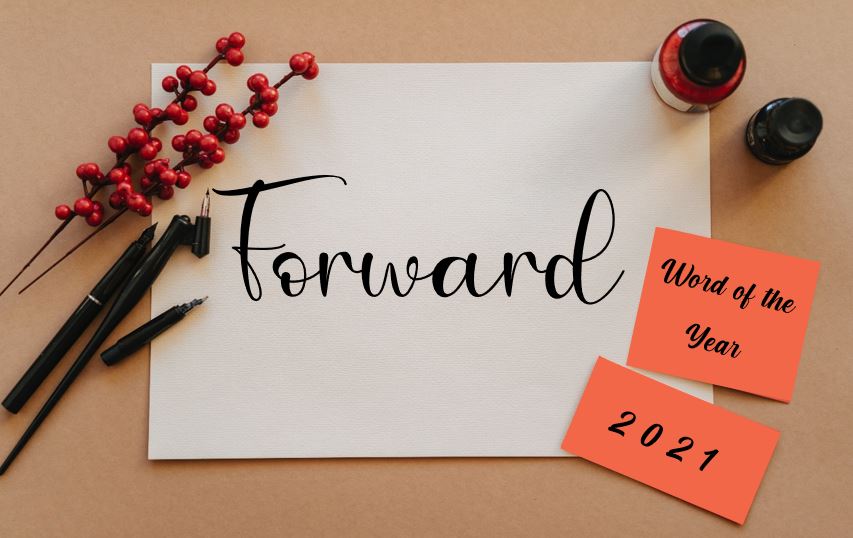
For this reason, I have chosen the word forward as my word for 2021 (oneword365.com). My aim is to move forward and achieve more from my life. I will adapt and forge ahead by concentrating on the light to diminish the darkness of the negativity. Forward is my direction in both thought and deed. 2021 is the year I will keep moving forward.

Unprecedented Times

“Stories never really end… even if the books like to pretend they do. Stories always go on. They don’t end on the last page, anymore that they begin on the first page.”  Cornelia Funke, author or Inkheart

For us, it was a crisp autumn day. You know. The ones that are chilly to start but the sun shimmers through the dappled rainbow of leaves paused to fall. Little did we know that the world we knew, was disappearing.

International news had touched on it. We hadn’t listened. It was so far away. It didn’t affect us. Empathy had yet to settle on our shoulders – it would soon enough with a weight that would, on occasions, be crushing. Who would have thought we would be encountering the maze of living through an emerging pandemic that is spreading rapidly across the world? We have not seen the likes of this since the Spanish Flu back in 1918. As we begin to face these unprecedented and unsettling struggles, we begin looking for wisdom from the past.

Some predicted it. Movies and books alluded to it. Within the space of a month, the world has significantly changed. This virus has already crashed economies, filled hospitals and emptied public spaces. It has separated people from their workplaces, friends and loved ones. We are witnessing a disruption to modern society on a scale rarely witnessed. Panic mass buying has left almost all supermarket aisles bare. This pandemic is etching itself upon the world’s psyche.

“Feelings come and go like clouds in a windy sky. Conscious breathing is my anchor.” Thich Nhat Hanh

At times such as these, it can be difficult to remain calm and focused. It’s easy to get caught up in fearful or worried thinking about what might happen. Fear is a primal response. It is essential for our survival as it heightens our senses and helps to protect us. Unfortunately fear and isolation can lead to overthinking. When these take over our minds, we can easily become anxious. Learning to accept that fear exists then letting it go can be our driving force forward. We need to remember to be kind to ourselves as we face these new and daunting fears.

Humour is the antidote. It’s hard to be terrified when you have a broad grin on your face. Social media has aided with this. The growing number of memes and parody songs about what we are facing helps to lighten the weight I feel. It reminds me I can laugh facing uncertainty and adversity.

Sometimes it’s the smallest decisions that can change your mindset. Instead of grieving the life we knew a mere few weeks ago, I choose to look forward. I am looking forward to a life where we could greet friends at a café. A life where we can once again shake hands and hug. A life where I can embrace every member of my family. A life without the fear of catching a virus consuming the world.

“Often when you think you’re at the end of something, you’re at the beginning of something else.” Fred Rogers 

This virus is changing our current landscape. We are learning the importance of co-operation, communication, compassion and resilience. While social distancing prevents us from physically seeing people, we need to think beyond the present. We are reshaping our communities as we face extraordinary times. Flexibility is at the heart of the possibilities ahead. We cannot go back to the way things were.

“Frodo: I wish none of this had happened. Gandalf: So do all who live to see such times, but that is not for them to decide. All we have to decide is what to do with the time that is given us.”  The Lord of the Rings, pub 1954, JRR Tolkien

Patterns of production, distribution and consumption will change. Innovative technologies that have allowed some to work from home, will further develop and transform our physical workspaces. I certainly do not think that we can uninvent online remote teaching for example. Transportation networks may also change, just as drone technology delivering supplies may become the norm. Perhaps we are moving into the age of Robotics and Artificial Intelligence quicker than expected. It is all up in the air at the moment and I am finding it all very exciting. What we can probably say right now is that technological advances will continue to change the way we work, live and play in ways we cannot yet foresee.

Nobody could have predicted what the first few months of this year would bring, and nobody can predict what the next few. For now, what we need to do is be mindful of the time we have been gifted from social distancing.

“Even the darkest night will end and the sun will rise.”  Les Misérables, pub 1862, Victor Hugo

While we face huge challenges, physically, mentally, emotionally, socially, and financially, challenges that are unprecedented in our lifetime, they will not last forever. So, on another crisp morning, as I observe the constantly changing rainbowed leaves dance their autumnal frolic down to the ground, I pause. Change is inevitable. I cannot control it. I focus instead on how we will re-emerge like butterflies from a chrysalis.

people-holding-white-paper-with-pandemic-covid19-text-3952234

I thank all our essential services for their extraordinary additional work and commitment to our communities during these unprecedented times. Please stay healthy and safe.

Build Trust. Fail Forward.

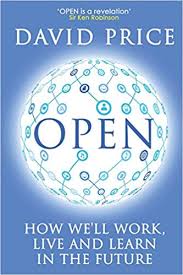
Recently I read Open: how we’ll work, live and learn in the future by David Price, a worthwhile and recommended read. One quote stood out. One that is both worrying and a concern for many in the profession. David writes that “it is often said that a time-traveller from the 19ths century, beamed into today’s world, would be bewildered by everything he witnessed, but would instantly feel comfortable in a school.”

We have all heard much discussion about moving forward with education: blended learning, compacting curriculum, hackathons, flipped classroom, MOOCs. While the list goes on and there are many eager to explore these approaches, I believe that there are two things interfering with our progress: lack of trust and fear of failure.

Failure and making mistakes are great learning opportunities and should be viewed as the lifeblood to success. Experimentation is about moving into unknown territory and we must have the freedom to fail in order to innovate.

Perhaps we need to look not at having the freedom to fail, but view it as failing forward. If we fail forward, we learn, innovate and build resilience. Freedom comes through opportunities. Opportunities are our guides and failures are our teachers.

Henry Ford said that “failure is simply the opportunity to begin again, this time more intelligently.” It is agreed that we learn from mistakes and if we ask our students to be risk takers, then we must also be willing to take them. But why then aren’t we willing to try? Do we not take risks because we fear what others will think? Are we not capable, smart enough or experienced enough to succeed? Or is it because we feel there is no trusted support around us to help when we do make mistakes?

Michael Dell from Dell Inc stated that “to encourage people to innovate more, you have to make it safe for them to fail.”

Building mutual trust with those we work with is essential. Placing trust in others not only instils confidence but allows them to take ownership of the process. In turn, they should trust those who have given them the latitude to take risks. Trust is reciprocal. It is through this trust that we will be able to fail forward.

If our main concern is never to make a mistake, we will only ever meet the status quo. We won’t be looking for ways to make improvements or take any risks. Imagine an environment where innovation is not encouraged – All you will have is a hive full of worker bees, but no real visionaries to move forward. Is this perhaps why the time-traveller would feel at home in our classrooms?

Having the freedom to take chances and learn from our mistakes is essential. We have been doing it since childhood but somehow we have lost our courage to do it along the way. We must be able to make mistakes followed by the opportunities to grow from them and move forward in turn. It is not about rewarding the mistakes; the power lies in the trust to make them and learn.

Passion and purpose come from trust and enables us to embrace new thinking and learning. It is the courage we have in being vulnerable that supports the learning necessary for innovation, breakthroughs and success. Innovation and trust thrive in an environment where shame and blame have no stronghold. A culture that supports failing forward and encourages ownership of mistakes, reaps the benefits of better solutions and increases engagement.

Yet teaching remains one of the most private professions. We are living in a world that is highly social, linked and networked, yet we as teachers are fearful of sharing, being open to take risks and instead remain as we always have: retaining the status quo.

John Dewey said it best: “If we teach today’s students as we taught yesterday’s, we rob them of tomorrow.” We cannot continue to deprive our students. We have to work at changing the way we do things. We have to learn to trust and to have the courage to fail.

Trust doesn’t just happen, and we don’t intentionally work at building it. Perhaps this is where we start. If we want to inspire the youth of tomorrow, we must first start trusting each other, have the freedom to innovate and be willing to fail forward.

David Price claims that “hard fun is something that all learning professionals should strive to create.”  So, here’s to the hard fun ahead of us as we embrace change, begin to build trust and take greater risks to innovate.

After all, in the words of Soichiro Honda, “success is 99% failure. What we learn through failure becomes a precious part of us, strengthening us in everything we do. So, let the tough things make you tougher.”

Build Trust. Fail Forward.

Open

Optimism and Possibilities

Recently I was asked about my views of optimism. My response: that it is deeply rooted in the ability to see possibilities. Without this, one cannot be optimistic. An optimistic person sees opportunities in every situation, and searches for possibilities of how to reach it. There are always possibilities, you just have to look for them.

Having an optimistic mindset simply helps our experiences feel more fulfilling and enjoyable. While many believe that optimism is something we’re born with in more or less finite quantities, I believe that we actually have the ability to shape our thoughts and actions, including our outlook on events.

Today’s increasingly complex and uncertain world presents us with many challenges and opportunities never before experienced. It can be both daunting and exciting depending on how we look at things. Some will analyse these situations with a ‘glass half full or half empty’ view. This is an oversimplified truth that can be thought limiting. By believing the glass to be either half full or half empty, we do not think beyond or look at the possibility that there may be another option. Most people miss the point…. the glass is actually refillable. An optimistic person is open to new possibilities and sees beyond what is directly in front of them.glass half full

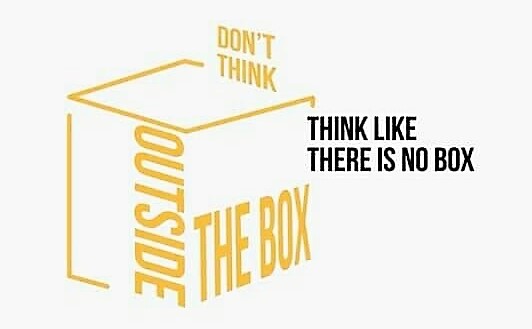
Thinking outside the box means we are being more creative, seeing more possibilities. I believe this is true, however it implies that the box remains. That one constraint continues as a hindrance in the thought process. Does it represent a fixed mindset that still exists in our thoughts? Is it the barrier that remains to prevent us from see more possibilities? Should we not be thinking like there is NO box? Our ideas and possibilities would then be unlimited. After all, to have ideas is to ask what’s possible, with imagination.

think like no box

Photo Source: Raising Kids with a Growth Mindset Facebook page

How do we then tap into the power of optimism? For me it is more than looking for opportunities, it’s more about being open to many possibilities. What we see depends mainly on what we look for. We have to open our minds, take a second, third or even fourth look and consider the possibilities. It takes a lot of courage to step away from the familiar and secure, to embrace the new. After all, old ways won’t open new doors! Therefore, we need to release ourselves from the fear of the new and unfamiliar. When nothing is sure, everything is possible.

Some say you need to ‘look on the bright side of life’ but this is only successful if you see the shadows also. Having moments of sadness, makes us appreciate happiness more. Optimism is a perfect response to failure and mistakes. If there exists no possibility of failure, then victory is meaningless. It is a balance between light and dark. For even in the darkest of places, it is possible to create light. Colour is born of the interpretation of light and dark… and what a rainbow we can create. The possibilities are endless.

The day I stop looking for possibilities, will be the day optimism fades from my life. So, when I am feeling uncertain, confused or lost, I remind myself to look for the possibilities in the most unlikely of places. It is through my belief in infinite possibilities that I am passionate, energised and grateful for the opportunities around me. I have learnt to connect the space of knowing with the space of possibilities – This is what drives my optimism. Thomas Edison, another persistent optimist, sums up my point quite simply…

“When you have exhausted all possibilities, remember this… you haven’t.”

possibility sign

Balance

At the beginning of the year, we were challenged to find a word to focus on for the year. One word to focus on every day. One word to sum up who you wanted to be or how you wanted to live. (http://oneword365.com/)

I chose the word: Balance.

images.jpg

A well balanced life is essential for living well. Everyone talks about ‘having more balance’ in their lives but what does that really mean? I made the commitment to go in search of greater balance in my own life and this is a reflection of my journey so far…

I feel like balance has become a ‘buzz’ word and as a result its meaning has become skewed. The very definition itself claims that different elements should be “equal or in the correct proportions.” Should this mean that we must maintain an equilibrium at all times? Is that even a realistic thought?

IMG_2321.JPG

Being a visual learner, I imagined a set of scales. They have the ability to balance and tilt in either direction. Perhaps the key to understanding balance was to ensure that you do not have the scales tilted for too long in one direction. If either side is taken to an extreme, something that is intended to be positive can end up being detrimental.

So, what is it we are trying to balance? Perhaps it is not work on one side and life on the other. Maybe the comparison is between internal (mind, heart and health) and external (work, social, family, fun, environment) aspects of the spectrum. Were the ends the same for everyone? Or could they change for each person or each situation? You might possibly weigh your balance on two alternative elements. I might change them periodically.

I once read that, in order to achieve balance, you must become a person that is more capable of accepting and dealing with chaos and has the personal abilities to create balance in their own lives. This year has been a journey of self awareness. I find that the more mindful and present I am in my life, the better choices I make around where my energy goes – giving my life much more balance.

After almost a year considering my word, here is what it means to me:

I have learnt that balance is different to each of us. It is about recognising what is important to us and how we choose to fill our time. To achieve balance, we need to prioritise each side of the scale. Whether you refer to it as a work / life balance, or the balance between your internal and external self, they’re not two halves that should or can coexist in equal measure at all times.

Balance is about being able to guide yourself back when you’ve gone too far one way or the other. It’s about being flexible, yes, but more importantly it’s about being forgiving — being able to say to yourself that it’s OK if you don’t know the answer, and it’s OK to change your mind.

Balance is about letting judgement roll off your back, whether it comes from those around you or from inside. It’s about letting go of pride and accepting help when you need it, just as much as it’s about silencing the voices around you and being brave enough to follow your own inner guidance. It’s about seeking the calm amid the chaos and being patient if it doesn’t come when you call.

It is a process I am still learning but remembering the process is more important than the destination helps. Sometimes I am going to focus more on one area of my life. For me, this does not necessarily mean I’m neglecting the others. Changing my perspective of what balance means and how I can achieve it, is bringing me a renewed sense of contentment.

“Happiness is not something ready made. It comes from your own actions.” (Dalai Lama)

rocks.PNG

Fall Down Seven Times, Stand Up Eight

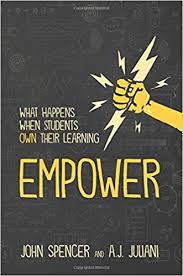
Empower by John Spencer and A.J. Juliani was a book I literally couldn’t put down and could have tweeted all of it. It was not a heavy read but it offered me questions about my teaching that was a springboard for many of my own. It has left me feeling inspired and energised at a time when I felt I was beginning to stumble.

For over a year, I have been trying to transform my teaching and my classroom. My aim was to engage my students so they could become confident self-regulated learners. I was taking a risk. I was embarking on a new realm of education. It was a direction I knew I needed to guide my students to take. I wanted them to have a voice, be creative and own their learning while they embraced the road bumps on the way. Was this feeling of stumbling based on my fears it was too left field? I mean, what if I was seen as being a neglectful teacher because I was not micromanaging every aspect of their learning?

All my previous hesitations re-emerged when reading, but this time it was with a renewed perspective, an inspired one. I was encouraged that what I was doing was definitely on the right path. I was reinvigorated that others were also on this journey – I was not alone. Perhaps I was jumping in too deep and trying too much at once. Perhaps my fear of failing was starting to hold myself and my students back. Either way, I found myself eager to try again and forge forward on my journey to empower students.

The Japanese proverb “Fall down seven times, stand up eight” comes to mind and has me wondering. Falling and getting back up is a natural process. We did this all the time growing up: when we learned to talk, walk, eat and play. At some point however, we seem to have grown out of this. Fear seems to have taken over and we have learnt to make excuses to avoid stepping too far outside the box. Perhaps we thought we were too small to make a difference. My response to this: Have you ever tried sleeping in a room with a mosquito? A small change can make a big difference and as John and A.J. suggest, “try it for just one day.” Yes, we need to step out of our comfort zone and start with one small change. After all, as Walt Disney once said, “If you can dream it, you can do it!” We should not let anything hold us back.

Whatever this change is, embrace it despite the obstacles or falls along the way. We must fall down seven times, stand up eight” to achieve our goals. We must overcome the fear of failing and celebrate every hurdle encountered. We must learn to listen to our intuition and follow our ‘flow’ – Most importantly, we must allow our students to do this also.

Life is about learning lessons, not repeating same mistakes. Mistakes are not failures but failings we can grow from. If you fall and don’t get back up, the only path left is defeat. Failure. However, if you get back up there is still hope. Failing is therefore a springboard forward. The fight to succeed is important. It is about adjusting what you are doing to achieve the desired goal. To do this, you must be creative in your thinking, open to many possibilities, and essentially have an entrepreneurial mindset. Thomas Edison daringly revealed “I never once failed at making a light bulb. I just found 99 ways not to make one.” Imagine is he didn’t ‘stand back up’ that last time?

“Fall down seven times, stand up eight” is an experience we want to inspire in our students. The students we teach will in fact create the jobs we cannot yet conceive. They are going to need to be creative, persistent in the face of setbacks and self-managers not only their time but also their goals. Should we not then be guiding our students in this process as early as possible? Only then will they have the resilience to face these challenges with confidence.

So, what is holding us back?

Whether it is our pride, our experience or current attitude, we need to be brave and ask our students to be brave too.

IMG_9742 (2)

Empower has inspired me to listen to my heart and continue my journey to transform the lives of my students. Will I succeed? Hopefully. Will I fall along the way? Absolutely. The important thing is for me to embrace the times I am failing so that when I stand back up I am prepared to take another step towards achieving my goals. With any luck, my students will experience the same. Bruce Lee once summed up the role of a teacher, one that John and A.J. present in their book, and it’s a nice quote to bring my reflection to a close:

“A teacher is never the giver of truth. He is a guide, a pointer to the truth that each student much find himself.”

Empower book

Moving Forward

Education. We know we need to change. We watch documentaries about it, people post on Facebook and tweet about it. Yet how do we move from behind the screens to actively make the changes we so desperately agree with? Have we become too safe where we are? Are we subconsciously afraid of changed?

We all have our own creative power but we are not using it. How many of us say we are not creative?

A close friend of mine said as much for years despite me seeing the potential she had. This year though, something changed. She started to believe that she was capable of being creative and the transformation has been incredible. Somehow all her creativity and passion for education that lay dormant, began to surface. She saw a need for an innovation and creativity co-ordinator at her school! So instead of waiting for the role to be created, she decided to take action. She wrote an astonishingly brilliant letter for why this role was necessary for our school to ‘move forward’ along with an extremely detailed job description and presented it to management. They were inspired. I am in awe of her creative initiative and it is shifting perspective at our school. Are there other such niches? Could I do something like that? Staff are now actively looking to make changes. All they needed was one innovator to lead the way.

Somehow we have lost the ability to trust ourselves, especially in our creative (innovative) abilities. Maybe it’s less about trust and more about comfort. So, how can we begin to change by moving forwards in education. By trusting ourselves and not being content to continue with our current circumstances when we see there is a need. To do this, we really need to look to each other for support.

The Innovator’s Mindset and the online #IMMOOC group is helping many to shift their focus and to nurture passions. They are a small group fighting to help each other to bring together ideas of how we can transform education. I acknowledge, we cannot hope to start changing the bigger issues immediately, but we can start with something small: within our classroom, our school, ourselves.

Perhaps before we can move forward we first need to talk about change and creativity and define what they actually mean.

Change is about making something different but it is a difficult term to put into practice and a frightening one for many. “Maybe the fear is that we are less than we think we are, when the actuality of it is that we are much much more,” (Kabat-Zinn, 2013). Yes, indeed. We ARE so much more. This is why I also feel we need to define creativity. I do not believe it solely means to pick up a brush and paint like Van Gogh. Rather, I see creativity as innovative thoughts. Creative doesn’t have to belong only within The Arts. Instead it is in everything we do in education. It is the generation of ideas. It is the construction of new paradigms. It is the conceiving of ideas. For are these not also associated with creativity?

There have been continuous and rapid changes in the world around us that have been highly creative in different fields. Why then, has education basically remained the same for more than a century? We cannot change the direction of the river; we need to let it flow its course. Jon Kabat-Zinn wrote: “You can’t stop the waves but you can learn the surf,” (Hodges, 2012). In education, we have not allowed the river to flow, nor have we tried to surf the waves. Instead, have tried to build a dam in order to keep things the same.

We need to fracture the dam wall we have constructed. Let’s begin to surf the tide and allow the current to flow. It all starts with a few courageous educators, like the #IMMOOC group, to start a conversation around active change, curiosity and innovation. It is our responsibility to keep the dialogue open. For it is only when we support each other that transformational change is truly possible and once again we begin to believe in our creative (innovative) capabilities.


References:

Hodges, D. (2012). The Little Red Book of Teacher’s Wisdon. USA: Skyhorse.

Kabat-Zinn, J. (2013). Arriving at Your Own Door:108 Lessons in Mindfulness. UK: Hachette.


A retrospective view of myself

Yesterday I read an interesting post by Anthony Epes on the Digital Photography School site that resonated with me. Not because of the photography tips he gave, although they were excellent, but because it made me reflect on who I am. What ignited a deep, soul search contemplation of who I am were the quotes that were scattered throughout. The following are my reflections, or musing if you will, that were sparked by two of these quotes in particular.

“At its root, perfectionism isn’t really about a deep love of being meticulous. It’s about fear. Fear of making a mistake. Fear of disappointing others. Fear of failure. Fear of success.” Michael Law

An interesting group of words to consider. Perfectionism and fear. How many of us really reflect on ourselves using these two words? Recently, I was in a situation that required me to consider this very notion. Was I trying too hard to please others? What was the cost to myself and others? Was this really the right direction for me? Had a friend not drawn attention to this possibility, I might still be walking through a world of perfectionism without realising the hold fear had taken over me. A world which I was beginning to apprehend was negative, fixed and was leading to a path of disintegrating failure and exhaustion. This was not my life. It was not truly living. How did I become so fixated on doing things perfectly? In doing so, I had allowed fear to subconsciously creep in and take up residence.

Michael’s words reverberate in my mind like ripples from a stone thrown in a lake. I am fearful of making mistakes. I am fearful of disappointing others. I fear failure and at the same time I fear success. As a teacher, I want to empower my students to go beyond their fears, to embrace taking risks. Yet here I was, looking at myself from a new perspective and with each new concentric ripple of the circle, I realise the magnitude of my flaws. How could I truly inspire my students if I was consumed by fear in a negative way. Retrospectively, I could see it was the source of all my worrying. Left unheeded, the circle of apprehension was vast and was not losing momentum. If anything, it was certainly increasing. Somehow I needed to change the direction of the ripples in my pond. I was losing sight of who I was at the middle.

Reading on another quote stood out for me:

“As long as habit and routine dictate the pattern of living, new dimensions of the soul will not emerge.” Henry Van Dyke

Ah-ha! Could this be it? Had I allowed myself to become complacent, self-satisfied or even smug with the success I was achieving? Had this success caused me to fear losing face if I make any mistakes? Would this really lesson who I was as a person if I did lose face a little? Was this a place I had put myself in or had others placed me there? I am not sure this particular question can ever be fully answered but I do realise that habits were definitely dictating my life but only because I was trying to play it safe. So I started to look a little deeper in to this particular ripple.

I enjoy positive feedback. Let’s face it, who doesn’t? The reality was I have become reliant on it, needing its validation almost as much as I needed air to breathe. The only problem was I do not think I was actually breathing anymore. Others no longer saw a need to praise my efforts because I was doing everything well. It was nothing new, why did they need to. As a consequence, I was not stretching myself. The habit of staying safe and doing things well without mistakes has diminished my drive for life, my inspiration, my creativity. Fear had taken over quite some time ago and I had not paused to realise. Henry was right. I needed a new dimension to my soul and I was not going to achieve it by playing it safe and continuing to do things as I always had.

Oddly at this point I might add that although I am beginning to see this new side to me, I also see and mostly feel the complete opposite daily. I feel I am a very innovative and creative educator constantly looking at new ways for students to learn. I regularly encourage them daily to step out of their comfort zone and to take risks. I inspire them to look outside the box for different alternatives or possibilities. What I realise I am not doing, is expecting the same of myself. And I should be. If I am to embrace being an educator with an innovator’s mindset, then I have to do this.
Defining moment: I am two sides of the same coin!

There are two perspectives, both with different aspects and facets.  I seek purpose and security. I am a perfectionist and I am fearful. The problem is, I have only looking at one side of the coin without seeing that both side can be balancing. When a coin is thrown in the air, it is a rotation of both sides – no decision has been made by the landing. This is the point that I need to be at. I want to keep my coin in the air. Not because I do not want to make a decision but because I want my life to be a combination of both sides. I was to find the harmony or balance between the two. I want to remember to see both sides of the coin. In order to make good decisions, I need to view both sides. I think I have forgotten to throw my coin in the air for quite some time. Instead, I have left it sitting on the table too fearful of seeing what was on the other side, waiting for someone else to throw it in the air. That is not their job. It is my coin, my life. The responsibility remains in my hands.

In Anthony’s post he stated “It doesn’t matter if what you do is terrible, just do it.” I will probably always have the fear Michael talked about deep within me but I really need to embrace it instead of running or hiding from it. Only through embracing what I fear, will I be able to see that attitudes and perspectives are everything. I need to practice what I preach and step out of my comfort zone and take risks. Only then will I discover new possibilities and inspiration. You never know, this might just be the turning point in my life. The flipping of the coin. I seek to be brave but to do that I will need to break old habits and find a greater balance in my life. To do this I need more of what life has to offer rather than focusing on teaching. For example: More sleep. More music. More tea. More books. More sunsets. More long walks. More laughter. More dreaming. More creating. More road trips. More opportunities to take photos. Perhaps if I let go and open up a little more, I may just find a new dimension to my soul.

I had no idea the direction this post would take, nor the discerning view I would end up with. What I do think is clear, is that we all need to take a moment and reflect on who we are. If we are to be the change in this world of ours, we must first look within. For only then can we truly be transformational and make a difference. Only then can we be genuinely innovative. When was the last time you took a moment to reflect on who you are? When was the last time you shook things up and stepped out of your comfort zone? Isn’t it about time we paused to consider these two questions!


If you are interested in reading the article I reference in today’s blog, you can follow this link: http://digital-photography-school.com/inspire-creativity/