Inquiring minds want to know

“The important thing is not to stop questioning. Curiosity has its own reason for existing.” – Einstein

Students learning through their own agency and investigations. What a wonderful concept that allows for voice and choice. Inquiry is a passion of mine and I am in a constant state of wonderment of what my students can achieve.

There are a multitude of possibilities when you think about inquiry and the opportunities that can open up when you incorporate it into a classroom. An understanding environment that is based on trust and where students are valued are integral for inquiry to work.

So what is inquiry to me?

Inquiry learning essentially is a way of thinking that traverses all learning areas. It gives students choices to take risks, embrace and learn from mistakes, opportunities to excel and support to grow into their potential. It is a process that allows students to pursue their interests and develop collaborative, thinking and problem solving skills. Essentially, inquiry learning encourages students construct meaning for themselves and in doing so they engage more passionately when trying to answer questions that interest them. In the end, students’ take away both content and process, the latter develops the notion of lifelong learners.

Embarking on the inquiry pathway does require both planning and flexibility in addition to knowing the student to a depth of anticipating their interests and limits. It requires you to be innovative and creative so as to find ways to integrate necessary content. While many new to inquiry learning may feel resistance or frustration along the way, it is definitely worth the effort of persisting. It is important to remember that true learning occurs when students engage with a question or personal inquiry by discovering answers, coming up with theories and formulating more questions.

So where to begin?

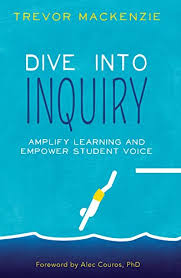
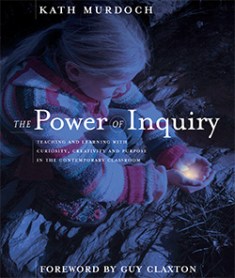
I do not believe there is a one size fits all, just as our students are not all the same. That is why I think it is invaluable to read as much on the topic as possible and formulate protocols/scaffolds for your classroom that suits both you and your cohort of students. There are two books that I highly recommend reading to gain a better understanding of inquiry learning and to get you started: Dive into Inquiry by Trevor MacKenzie and The Power of Inquiry by Kath Murdoch. Both books are affirming and challenging my thinking about inquiry, acknowledging it has many guises. I am buzzing with possibilities.
dive-into-inquiry            power-of-enquiry

Dive into Inquiry by Trevor MacKenzie

The door of inquiry opened to Trevor when he asked one of this students “What do you truly love to do?” This question inadvertently transformed a struggling student’s life as well as the way Trevor managed his classroom. His book gives you many examples of students’ successes through using the Inquiry approach. I love the fact that many are extended with QR coded links. He writes about how taking responsibility for learning empowers students and amplifies learning.

This particularly resonated with me. This is exactly what is needed to avoid the all too often ‘learned helplessness’ that we see surfacing more and more in a world where are students have become the ‘I want it now’ generation. Everything is at their fingertips. There is no need to persist and information is readily available. Patience is a virtue but many students seem to lack the effort required. Inquiry learning changes this perspective. It is through exploring the learning process that headways are made.

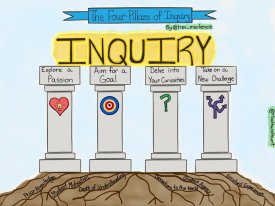
Being a visual learner myself, I particularly loved the graphics he used to highlight key learning in the process of scaffolding inquiry. As the saying goes, “a picture says a thousand words.” The following two graphics have defiantly caused me to pause for thought. Have I been structuring inquiry following a progression of stages? Do I offer four options for beginning inquiry questions as suggested in the Four Pillars of Inquiry? Having only just read this book, I am eager to reflect on these questions and make classroom adjustments accordingly. I am very excited!

types-of-student-inquiry            4-pillars-of-inquiry

The Power of Inquiry by Kath Murdoch

Kath’s book is a hands on resource that unpacks how inquiry teachers teach. It is steeped in research but is rooted in strong pedagogical foundations. It was released earlier this year and my copy is already well worn and lovingly tattered. Evidence that it was written for the busy teacher to easily access. This is a must have resource!

The Power of Inquiry is the ‘go to book’ for inquiry as it outlines the practicalities that need consideration: conducive physical space; planning; assessment; documenting what Kath refers to as i-Time; and building a school culture of inquiry. Each section offers ideas and suggestions that can be easily implemented by refinement existing teaching practices.  It has lead me on a journey to reflect on the following key words: time; space; purpose; listening; observing; reflecting; and feedback. All of which remind me that it is imperative to design learning that matters.

Key points to remember:

  • Collaboration allows students to delve into their questions in a fun, non-threatening way that allows them to connect and bounce ideas off one another. Collaboration is key and is fundamental to solving real life problems.
  • Powerful questions help students own the process of learning. We need to help our students start asking the right questions. Not questions about learning but questions for
  • Visual thinking routines or protocols foster student inquiry.
Be a designer: Transforming schools

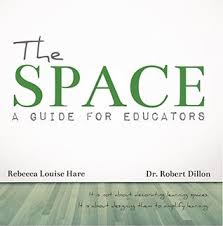
“Your students deserve classrooms that support their learning experiences. You can design that space.” Hare and Dillon

If I were able to start a school from scratch, it would look very different to those traditional classrooms we mostly still have today. There would be considerable flexibility: in furniture, space and teaching. Seating would be a range of options from coffee to standing tables. There would be sofas, bean bags and pillows for those wanting an alternative to sitting at a table. The space itself would have several ‘zones’. The function of these zones could be determined in collaboration with your cohort of students. Examples could include a quieter zone, a reading zone, an imagination zone, a maths zone or a science zone. Lighting would also be different for the various zones as well. Teaching would no longer be someone standing at the front giving all the information to be rote learned for constant testing.

Interestingly, this dream is starting to become reality. There are some school who are bravely taking a step in this direction. Gone are the days of classrooms. Instead they are now referred to as ‘studios’. Work has been replaced with ‘learning’ which is encouraging continuous effort that is enjoyable not a labour. Teaching also is changing. Some schools are opting for team teaching where there are two studio teachers and an assistant for each grade level. Yes, the class sizes might be a little larger but there are three educators assisting students with their learning. How wonderful to have another educator teaching alongside you who helps you to co-plan, co-teach and co-assess! Imagine having a second option on how to reach a particular student, a second option in the form of another teacher who ‘knows’ that student as well as you!

With change there are always challenges. It can take staff six to twelve months to adjust to working within these new conditions. Let’s consider the changes that can be overwhelming at first. There may not be one physical seat for every student; teaching may not occur as a whole class but as small group workshops; students may take more ownership of their own learning thereby building self-regulatory skills; learning might have more of an inquiry focus; and teaching personalities and styles my take some time to find their working balance.

There are also many beneficial changes that can transpire that should be noted. Think of a ‘studio’ where learning is amplified; students are more motivated and engaged and they feel empowered; overall focus and attention is significantly higher; teachers are more like coaches who guide, instruct and prepare their students; and the process of learning is valued higher than the end products. If students can take ownership of their learning through choice of content and where they actually undertake their learning, the benefits can be astounding.

While these changes might seem to some like science fiction and a fearful next step, in fact I am seeing the extraordinary benefits. Yes, I have the pleasure of working in such a transformative school. Our school was redesigned with the 21st century learner in mind. We are now in our fifth year of learning studios and I don’t think I would ever go back to my old classroom where I did everything on my own. I now work in an extremely collaborative environment where students are exceeding expectations. I am living the dream in a very exciting learning environment.

Back to the reflection question: If you were to start a school from scratch, what would it look like?

Curiously, I recently bought a book at an EdTechTeam conference in Melbourne and that would exceptionally valuable if you starting the journey of redesigning your school. “The Space: A guide for educators” by Rebecca Louise Hare and Dr Robert Dillion is an amazing resource. It is both instructive and is a guided notebook for you to jot your ideas down. It provides the right amount of thoughtful provocation and advice for moving forward. It will inspire you to rethink what a school/classroom should look like or be. I recommend this book to anyone thinking of making a step towards a learning space that empowers students!

 “Your students deserve classrooms that support their learning experiences. You can design that space.” Surely this is what we want for our students! Let’s be brave and take the first step towards this goal.

the-space

Moving Forward

Education. We know we need to change. We watch documentaries about it, people post on Facebook and tweet about it. Yet how do we move from behind the screens to actively make the changes we so desperately agree with? Have we become too safe where we are? Are we subconsciously afraid of changed?

We all have our own creative power but we are not using it. How many of us say we are not creative?

A close friend of mine said as much for years despite me seeing the potential she had. This year though, something changed. She started to believe that she was capable of being creative and the transformation has been incredible. Somehow all her creativity and passion for education that lay dormant, began to surface. She saw a need for an innovation and creativity co-ordinator at her school! So instead of waiting for the role to be created, she decided to take action. She wrote an astonishingly brilliant letter for why this role was necessary for our school to ‘move forward’ along with an extremely detailed job description and presented it to management. They were inspired. I am in awe of her creative initiative and it is shifting perspective at our school. Are there other such niches? Could I do something like that? Staff are now actively looking to make changes. All they needed was one innovator to lead the way.

Somehow we have lost the ability to trust ourselves, especially in our creative (innovative) abilities. Maybe it’s less about trust and more about comfort. So, how can we begin to change by moving forwards in education. By trusting ourselves and not being content to continue with our current circumstances when we see there is a need. To do this, we really need to look to each other for support.

The Innovator’s Mindset and the online #IMMOOC group is helping many to shift their focus and to nurture passions. They are a small group fighting to help each other to bring together ideas of how we can transform education. I acknowledge, we cannot hope to start changing the bigger issues immediately, but we can start with something small: within our classroom, our school, ourselves.

Perhaps before we can move forward we first need to talk about change and creativity and define what they actually mean.

Change is about making something different but it is a difficult term to put into practice and a frightening one for many. “Maybe the fear is that we are less than we think we are, when the actuality of it is that we are much much more,” (Kabat-Zinn, 2013). Yes, indeed. We ARE so much more. This is why I also feel we need to define creativity. I do not believe it solely means to pick up a brush and paint like Van Gogh. Rather, I see creativity as innovative thoughts. Creative doesn’t have to belong only within The Arts. Instead it is in everything we do in education. It is the generation of ideas. It is the construction of new paradigms. It is the conceiving of ideas. For are these not also associated with creativity?

There have been continuous and rapid changes in the world around us that have been highly creative in different fields. Why then, has education basically remained the same for more than a century? We cannot change the direction of the river; we need to let it flow its course. Jon Kabat-Zinn wrote: “You can’t stop the waves but you can learn the surf,” (Hodges, 2012). In education, we have not allowed the river to flow, nor have we tried to surf the waves. Instead, have tried to build a dam in order to keep things the same.

We need to fracture the dam wall we have constructed. Let’s begin to surf the tide and allow the current to flow. It all starts with a few courageous educators, like the #IMMOOC group, to start a conversation around active change, curiosity and innovation. It is our responsibility to keep the dialogue open. For it is only when we support each other that transformational change is truly possible and once again we begin to believe in our creative (innovative) capabilities.


References:

Hodges, D. (2012). The Little Red Book of Teacher’s Wisdon. USA: Skyhorse.

Kabat-Zinn, J. (2013). Arriving at Your Own Door:108 Lessons in Mindfulness. UK: Hachette.


A retrospective view of myself

Yesterday I read an interesting post by Anthony Epes on the Digital Photography School site that resonated with me. Not because of the photography tips he gave, although they were excellent, but because it made me reflect on who I am. What ignited a deep, soul search contemplation of who I am were the quotes that were scattered throughout. The following are my reflections, or musing if you will, that were sparked by two of these quotes in particular.

“At its root, perfectionism isn’t really about a deep love of being meticulous. It’s about fear. Fear of making a mistake. Fear of disappointing others. Fear of failure. Fear of success.” Michael Law

An interesting group of words to consider. Perfectionism and fear. How many of us really reflect on ourselves using these two words? Recently, I was in a situation that required me to consider this very notion. Was I trying too hard to please others? What was the cost to myself and others? Was this really the right direction for me? Had a friend not drawn attention to this possibility, I might still be walking through a world of perfectionism without realising the hold fear had taken over me. A world which I was beginning to apprehend was negative, fixed and was leading to a path of disintegrating failure and exhaustion. This was not my life. It was not truly living. How did I become so fixated on doing things perfectly? In doing so, I had allowed fear to subconsciously creep in and take up residence.

Michael’s words reverberate in my mind like ripples from a stone thrown in a lake. I am fearful of making mistakes. I am fearful of disappointing others. I fear failure and at the same time I fear success. As a teacher, I want to empower my students to go beyond their fears, to embrace taking risks. Yet here I was, looking at myself from a new perspective and with each new concentric ripple of the circle, I realise the magnitude of my flaws. How could I truly inspire my students if I was consumed by fear in a negative way. Retrospectively, I could see it was the source of all my worrying. Left unheeded, the circle of apprehension was vast and was not losing momentum. If anything, it was certainly increasing. Somehow I needed to change the direction of the ripples in my pond. I was losing sight of who I was at the middle.

Reading on another quote stood out for me:

“As long as habit and routine dictate the pattern of living, new dimensions of the soul will not emerge.” Henry Van Dyke

Ah-ha! Could this be it? Had I allowed myself to become complacent, self-satisfied or even smug with the success I was achieving? Had this success caused me to fear losing face if I make any mistakes? Would this really lesson who I was as a person if I did lose face a little? Was this a place I had put myself in or had others placed me there? I am not sure this particular question can ever be fully answered but I do realise that habits were definitely dictating my life but only because I was trying to play it safe. So I started to look a little deeper in to this particular ripple.

I enjoy positive feedback. Let’s face it, who doesn’t? The reality was I have become reliant on it, needing its validation almost as much as I needed air to breathe. The only problem was I do not think I was actually breathing anymore. Others no longer saw a need to praise my efforts because I was doing everything well. It was nothing new, why did they need to. As a consequence, I was not stretching myself. The habit of staying safe and doing things well without mistakes has diminished my drive for life, my inspiration, my creativity. Fear had taken over quite some time ago and I had not paused to realise. Henry was right. I needed a new dimension to my soul and I was not going to achieve it by playing it safe and continuing to do things as I always had.

Oddly at this point I might add that although I am beginning to see this new side to me, I also see and mostly feel the complete opposite daily. I feel I am a very innovative and creative educator constantly looking at new ways for students to learn. I regularly encourage them daily to step out of their comfort zone and to take risks. I inspire them to look outside the box for different alternatives or possibilities. What I realise I am not doing, is expecting the same of myself. And I should be. If I am to embrace being an educator with an innovator’s mindset, then I have to do this.
Defining moment: I am two sides of the same coin!

There are two perspectives, both with different aspects and facets.  I seek purpose and security. I am a perfectionist and I am fearful. The problem is, I have only looking at one side of the coin without seeing that both side can be balancing. When a coin is thrown in the air, it is a rotation of both sides – no decision has been made by the landing. This is the point that I need to be at. I want to keep my coin in the air. Not because I do not want to make a decision but because I want my life to be a combination of both sides. I was to find the harmony or balance between the two. I want to remember to see both sides of the coin. In order to make good decisions, I need to view both sides. I think I have forgotten to throw my coin in the air for quite some time. Instead, I have left it sitting on the table too fearful of seeing what was on the other side, waiting for someone else to throw it in the air. That is not their job. It is my coin, my life. The responsibility remains in my hands.

In Anthony’s post he stated “It doesn’t matter if what you do is terrible, just do it.” I will probably always have the fear Michael talked about deep within me but I really need to embrace it instead of running or hiding from it. Only through embracing what I fear, will I be able to see that attitudes and perspectives are everything. I need to practice what I preach and step out of my comfort zone and take risks. Only then will I discover new possibilities and inspiration. You never know, this might just be the turning point in my life. The flipping of the coin. I seek to be brave but to do that I will need to break old habits and find a greater balance in my life. To do this I need more of what life has to offer rather than focusing on teaching. For example: More sleep. More music. More tea. More books. More sunsets. More long walks. More laughter. More dreaming. More creating. More road trips. More opportunities to take photos. Perhaps if I let go and open up a little more, I may just find a new dimension to my soul.

I had no idea the direction this post would take, nor the discerning view I would end up with. What I do think is clear, is that we all need to take a moment and reflect on who we are. If we are to be the change in this world of ours, we must first look within. For only then can we truly be transformational and make a difference. Only then can we be genuinely innovative. When was the last time you took a moment to reflect on who you are? When was the last time you shook things up and stepped out of your comfort zone? Isn’t it about time we paused to consider these two questions!


If you are interested in reading the article I reference in today’s blog, you can follow this link: http://digital-photography-school.com/inspire-creativity/


Learning from Mick, Al and Tom

Over the years, much has been said about mindsets. From fixed to growth; individual to social; and unproductive to creative. For me, mindsets are all about being innovative. We need to incorporate what Dweck calls a growth and positive mindset with that of the creative, confident thinkers who turn fear and envy into a driving advantage. I believe that in order to have an innovative mindset, one needs to express gratitude for what has passed before otherwise how do they learn?  We need to be grateful for the mistakes we make and the trials we struggle with because these are the experiences we learn from. If there is no experience, the rest is really just a barrage of information.

This revelation got me thinking about the innovative mindsets of three remarkable men: Michelangelo, Albert Einstein and Thomas Edison. The way they saw the world and the possibilities that could be created through divergent thinking is inspirational and one we need to remember. Let me crudely summarise how they shaped an innovative mindset:

At the age of 87, Michelangelo said “I am still learning.” He understood learning was lifelong and happened each and every day. So what did he do that demonstrated an innovative mindset? He did not follow the crowd and do what his competitors did. He took a chance and did things differently. He saw opportunities to create and innovate on what others were doing and went further than they believed you could go. Because of this revolutionary thinking, he forged ahead artistically and redefined both sculpting and painting.

Albert Einstein declared that problems could not be solved with the same thinking that was used when the problem was created. He understood that you needed to look beyond the obvious, to explore possibilities and embrace mistakes. Constantly questioning the world, enabled him to be the innovative and distinguished person we know him to be. He expressed that education was “not the learning of facts, but the training of the mind to think.”

Thomas Edison did not see the world the same as others and appeared to struggle with ‘traditional schooling’. His teacher sent him home from school with a note saying he was mentally ill and was no longer allowed to attend school. When he asked, his mother read the letter to him saying “Your son is a genius. This school is too small for him and doesn’t have enough good teachers for training him. Please teach him yourself.” How fortunate that his mother saw something deeper in her son and did not share the original letter. Thomas went on to patent 1093 innovative inventions during his life, an achievement not equalled even today. He also knew the value of persistence and learning from mistakes. He is famously quoted as saying “I haven’t failed. I’ve just found 10 000 ways that won’t work.”

So what does having an innovative mindset mean for teaching, learning and life? Everything! We need to reflect on the innovative nature of these men. All three thought beyond their immediate adversaries and saw extraordinary possibilities and were willing to give it a try. They saw the need for constant questioning. They realised the benefits of persistence in order to overcome a defect. As educators and learners, we need to go beyond what everyone else is doing. We need to think not only outside the box but beyond it by looking for something unique that could make profound and pioneering changes. Change can be an overwhelming challenge but I think Chandor sums it up by saying “When it feels scary to jump, that’s exactly when you jump. Otherwise you end up staying in the same place your whole life.” I for one do not what to end up in the same place forever. I want to make a difference, however small.

Michelangelo, Albert and Thomas, I thank you for leading the way and showing us potentialities and giving us the confidence to try ourselves also. Therefore, I am actively embracing an innovators mindset and I am so excited for the journey ahead.

Can we rebrand learning?

Somehow I feel we have lost sight of what learning is. When did it become all about achieving results? Did we not start learning the minute we were born? Every minute since our birth, we have been constantly learning, constantly making mistakes, constantly making adjustments and refining what we know. What would have happened if we gave up after falling over when taking our first steps? A silly notion really but we certainly did not give up on achieving our goal – we persisted until we achieved that goal. However, our learning did not end there! Did we then not learn how to run, jump, and hop?

Over the years I have seen students who focus on the end result, what grade they will get, who they are better than and how easy it was. Then there are those who struggle and persist just as they have learnt to do from birth. They thrive on the challenges they face and strive to solve problems in unique ways. Which students do you think make the better progress?

I have been inspired by Carol Dweck’s ideas around Growth Mindset as well as Guy Claxton’s Learning Powers. There is something in both of their views that ring true to me. It resonates around the process of learning and not the end result. It is the student who learns to focus with a positive attitude when faced with adversity that will achieve in life. They are doing what they have always done and do not give up once a result has been achieved. They are constantly reflecting on the process of their learning and constantly making adjustments, or improvements if you will.

Learning is not work. Nor is it a chore.

Learning IS continuous! It is all about process and requires persistent struggle.

Learning is developed through what Guy Claxton refers to as the four R’s: resilience, resourcefulness, reflectiveness and relating to others. Carol Dweck defines that skills can be developed through effort and hard work while embracing challenges. Both believe that feedback is fundamental in identifying areas to improve in order to know themselves as learners. Setbacks are opportunities.

Should learning be rebranded? I believe it can and must. The focus should not be solely on the student, but on families also. Teachers can only do so much to encourage the process of learning. Sometimes it feels like an uphill battle. This battle is not with the parents or the students. The battle lies in our attitudes towards learning and what is rewarded: grades or process? Until we make headways with this argument, I am uncertain we can we can change the heading of education. What I can do, is change the way learning is viewed in my classroom.

For me, I am rebranding learning for students to value the process of learning greater than the grades they receive. I am rebranding learning so they are actually learning, not just working. Learning that celebrates the mistakes made and the possibilities of many solutions. Here’s hoping it will make a difference to the students in my care!

Entering the world of Blogging

Well this was not as easy as I thought it was going to be. Seriously… I am sure it was not supposed to be this hard. Perhaps it would have helped if I had continued blogging when I made my first attempt… 6 years ago! Anyway, here I am once again attempting to create a blog, feeling very inspired (albeit somewhat frustrated!) Please bear with me while I try and maintain motivation and momentum while I establish this wee little blog of mine. Here goes… wish me luck!